Bengal Cat Care Guide: Mastering the Art of Living with a Domestic Leopard
Welcome to the Essential Guide for Bengal Cat Care. This Complete Manual offers Expert Tips for managing a high energy feline with Wild Roots. Whether you are curious about their Health & Diet, Grooming Needs, or the unique Temperament required for Living with Bengals, our research-backed insights ensure you provide the best possible life for your exotic companion.
The Bengal Allure: A Miniature Leopard in Your Living Room
The Bengal cat is one of the most striking breeds in the world, renowned for its exotic appearance that mimics the wild Asian Leopard Cat. Unlike traditional domestic breeds, Bengals possess a hybrid ancestry that fuels their intense curiosity and athletic prowess. This unique background is what gives them their stunning coat patterns (rosettes/marbled) and a “glitter” gene that makes their fur shimmer in the light.
However, owning a Bengal is a significant commitment. They are not sedentary lap cats; they are highly intelligent, vocal, and active companions. This guide aims to provide a 360-degree view of their specific requirements, from protein-rich diet needs to the necessity of feline enrichment. Transitioning into life with a domestic leopard requires patience and a deep understanding of their biological drives.
1. What is the Bengal Cat Temperament and Personality Like?
The personality of a Bengal is often described as “dog-like.” They are incredibly intelligent and often insist on “helping” their owners with household chores, whether it’s watching you wash dishes or supervising your laptop work. This high energy breed craves interaction and can become bored or destructive if left to their own devices for too long.
One of their most famous traits is being among the few water-loving breeds in the feline world. Do not be surprised if your Bengal jumps into the shower with you or plays in their water bowl. They are also highly vocal, using a wide range of chirps, meows, and even guttural howls to communicate their needs. Providing constant mental stimulation is the only way to keep their sharp minds occupied.
2. Setting Up Your Home: How Do You Bengal-Proof Your Space?
Before bringing a Bengal home, you must consider the vertical space available. In the wild, their ancestors, the Asian Leopard Cat, spend significant time in trees. You should install floor-to-ceiling cat trees or wall-mounted shelves to allow them to survey their kingdom from above. Without high perches, a Bengal may resort to climbing your curtains or kitchen cabinets.
Safety is paramount. Ensure you remove toxic plants like lilies and secure heavy ornaments that could be knocked over during a “zoomie” session. Many owners find that a cat exercise wheel is a life-saving investment. It allows the cat to reach full sprint speeds indoors, burning off the high energy that might otherwise be directed toward your furniture.
3. Essential Nutritional Requirements for a Wild Heritage
Nutrition is the cornerstone of Bengal Cat Care. Due to their active nature and muscular build, they require a protein-rich diet. Look for high-quality animal proteins as the first ingredient, such as chicken, turkey, or beef. Avoid “filler” ingredients like corn, soy, and wheat, which offer little nutritional value to an obligate carnivore.
Hydration is equally important. Since Bengals are water-loving breeds, they often prefer drinking from moving sources. A pet water fountain can encourage them to drink more, preventing urinary tract issues. While some owners opt for a raw food diet to honor their hybrid ancestry, always consult a veterinarian to ensure the caloric intake and vitamin balance meet their specific needs. For more on feline nutrition, visit the Cat Info website.
4. Why is Mental Stimulation as Important as Physical Exercise?
A bored Bengal is a mischievous Bengal. Because they are so intelligent, mental stimulation is just as vital as physical movement. Puzzle feeders are an excellent way to slow down their eating while engaging their hunting instincts. You can also hide treats around the house to encourage natural foraging behaviors.
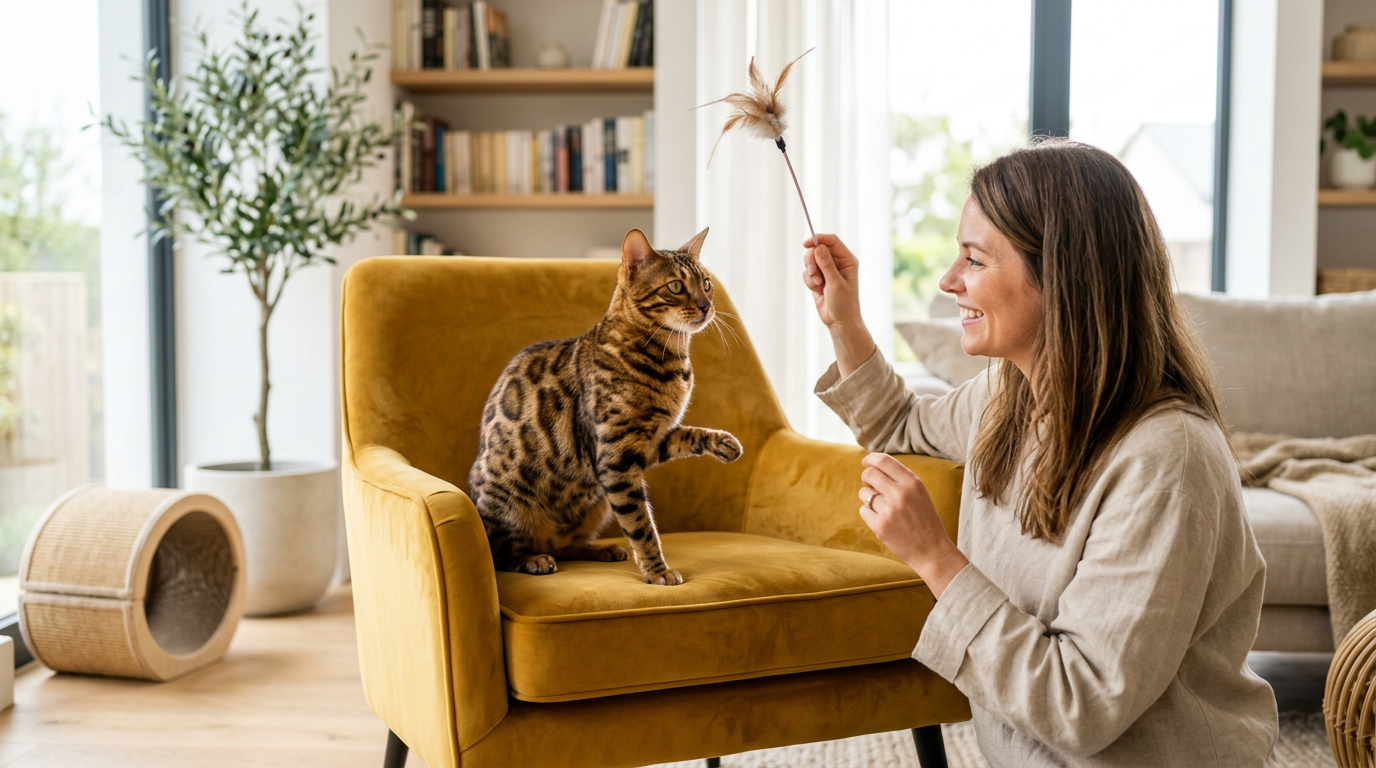
Incorporate interactive toys like feather wands or motorized mice into your daily routine. Many owners have success with clicker training, teaching their Bengals to sit, stay, or fetch. This not only strengthens the bond between you but also tires them out mentally. Rotating their toys every few days keeps the environment “new” and exciting, preventing the dreaded “Bengal boredom.”
5. Grooming and Hygiene: Do Bengal Cats Shed?
One of the perks of the breed is their unique “pelt” coat. Unlike the fluffy double coats of many domestic cats, the Bengal has short, sleek fur that feels like silk. While they do shed, it is significantly less than other breeds, making them easier to manage. Weekly brushing with a soft rubber brush is usually sufficient to maintain their coat patterns (rosettes/marbled) and healthy shine.
Beyond the coat, you must pay attention to their claws and teeth. Because they are active climbers, their nails grow quickly and should be trimmed every two weeks. Dental health is also critical; brushing their teeth regularly can prevent periodontal disease, which is common in many domestic felines. Learn more about feline dental health at the Cornell Feline Health Center.
6. What Common Health Issues Should You Monitor?
While generally hardy, Bengals are predisposed to certain genetic conditions. One of the most serious is hypertrophic cardiomyopathy (HCM), a condition where the heart muscle thickens. Responsible breeders will screen their breeding pairs for this condition annually. You should also be aware of Progressive Retinal Atrophy (PRA), which can lead to blindness.
Another health consideration is their digestive sensitivity. To maintain a healthy gut, avoid sudden changes in their protein-rich diet. Regular veterinary check-ups are essential to monitor for joint issues like Patellar Luxation. Ensuring your cat has a cat exercise wheel can help maintain muscle tone and joint flexibility, reducing the risk of obesity-related health problems.
7. Socialization and Living with Other Pets
Bengals are social creatures that often struggle with loneliness. They usually get along well with other pets, provided they have a similar high energy level. A slow-moving, elderly cat might find a Bengal’s play style overwhelming. When introducing a new pet, use scent-swapping and visual barriers to ensure a smooth transition.
They generally do well with cat-friendly dogs, often engaging in games of chase. For households with children, Bengals can be wonderful playmates as long as the children are taught how to respect the cat’s boundaries. Because of their need for feline enrichment, many experts recommend adopting Bengals in pairs so they can entertain each other while you are away.
8. Harness Training: Can You Walk a Bengal Cat?
Given their high energy and curiosity, many owners wonder if they can take their Bengals outside. While free-roaming is dangerous due to traffic and predators, harness training is a fantastic alternative. Bengals are excellent candidates for clicker training to get used to a harness. Start indoors, rewarding them with treats for simply wearing the gear.
Once they are comfortable, you can venture into a secure backyard. Outdoor walks provide unparalleled mental stimulation and allow them to experience the world safely. Always use a secure H-style harness designed for cats, as their liquid-like bodies can easily slip out of standard collars. For gear recommendations, check out Adventure Cats.
9. Litter Box Management and Household Habits
Bengals are known for being exceptionally clean—and occasionally picky. They require a pristine litter box environment. If a box is not cleaned daily, a Bengal might look for “cleaner” spots, such as your rug. Follow the “one plus one” rule: have one more litter box than you have cats in the house.
If your Bengal starts avoiding the box, it’s often a sign of stress or a need for more feline enrichment. Ensure the boxes are located in quiet, accessible areas. Because of their affinity for water, some owners have even successfully toilet-trained their Bengals, though this requires significant time and clicker training expertise.
10. Is a Bengal Cat the Right Choice for Your Lifestyle?
Before committing, ask yourself if you have the time to satisfy their need for mental stimulation. A Bengal is not a decorative item; they are active members of the family that demand hours of play and interaction. You will need to invest in interactive toys, vertical space, and perhaps even a cat exercise wheel to keep them happy.
The financial investment is also higher than average, given their protein-rich diet and potential for genetic health screenings like hypertrophic cardiomyopathy (HCM). However, if you have the energy to match theirs, the reward is a loyal, hilarious, and breathtakingly beautiful companion that shares a piece of the wild Asian Leopard Cat legacy.
Key Takeaways for Bengal Success
- Provide ample vertical space and a cat exercise wheel to manage high energy.
- Maintain a protein-rich diet and encourage hydration with fountains.
- Use clicker training and interactive toys for essential mental stimulation.
- Schedule annual vet visits to screen for hypertrophic cardiomyopathy (HCM).
- Celebrate their water-loving nature and unique coat patterns (rosettes/marbled).